Showing posts with label spain. Show all posts

Sunday, June 26, 2016

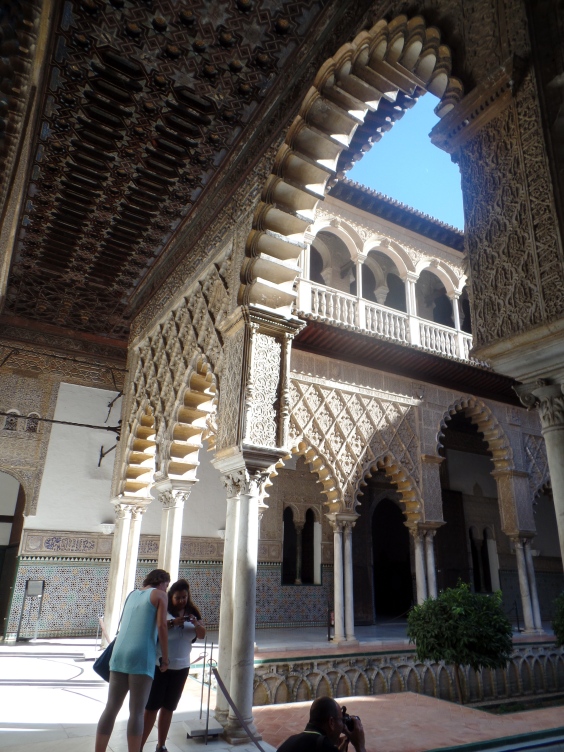
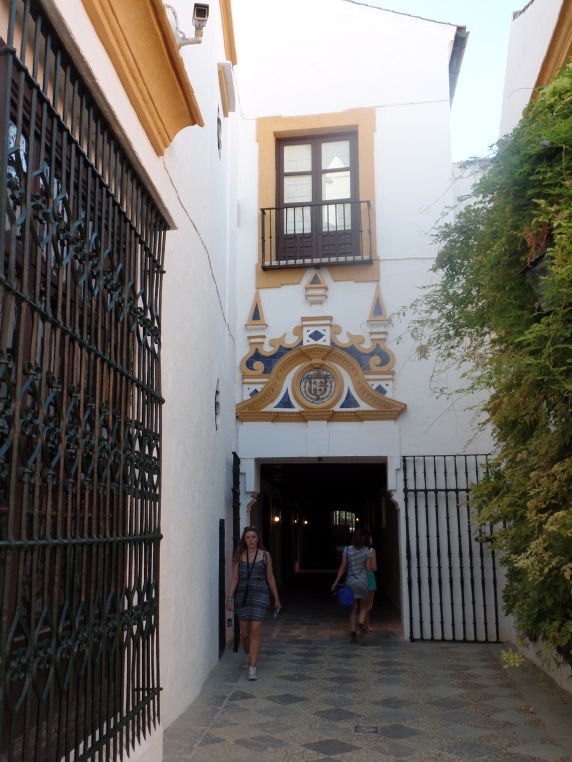
Inside the Real Alcazar in Seville, Spain


Millions of people heard of the Alcazar in Spain for the very first time, following an announcement from the producers of the mega-successful “Games of Thrones” series that it would shoot parts of the upcoming fifth season inside the Spanish Palace.
The Alcazar will serve as the location of the main palace of the ancient city of Dorne.
The excitement is justified considering the big following of the series. But for travel enthusiasts, the Alcazar is oh so much more than just a series location.
SAMSUNG CAMERA PICTURES
The Alcazar is a great reminder of the past kingdoms that have ruled the southern region of the Spanish peninsula, Andalucia.
The Reales Alcazares de Sevilla or simply, the Real Alcazar is a royal palace which sits on a what was previously a Moorish fort. It is the oldest royal palace still in use in Europe. In 1987, it was registered as a UNESCO World Heritage Site.
According to historical record, the Alcazar were primarily built for the Cordoban governors of Seville and construction began as early as 913 AD.
In the 11th century, rulers of Mulim taifa developed the original fort by building a palace called Al-Muwarak. This original construction can still be seen in the now western portion of the palace.
In the 12th century, Almohad rulers added an eastern palace around what’s now the Patio del Crucero and in 1248, Christian Fernando III moved into the Alcazar when he captured Seville in 1248.
SAMSUNG CAMERA PICTURES
Subsequent monarchs developed and re-designed the Alcazar such as Alfonso X who replaced much of the Almohad structure with a Gothic one.
Between 1364 and 1366, Pedro I built the Mudejar Palaco de Don Pedro which is the single most striking architecture and focal point of the entire fortress.
The Alcazar is an example of mudejar architecture, or the design personality of the Al-Andalus who stayed behind Andalucia after the the Christian Reconquisita but did not convert to Christianity.
I got the great opportunity to visit the Alcazar during my trip to Seville in September 2014.
If you have been traveling all over Europe, then chances are, you might have been saturated by the multitudes of palaces and forts and you might dismiss this Spanish palace as another, well, palace.
SAMSUNG CAMERA PICTURES
But for a first-time visitor to the continent, seeing the Alcazar up close was a magical experience. It was like stepping into a portal and getting a glimpse into the past. You can just imagine the Moors who used to occupy these halls. Then the Spanish monarchs who followed suit.
As I walked along the halls of the palace, I couldn’t help but notice the intricate designs, mosaics and tiles adorning the walls and ceilings.
The mosaics are so quite colorful and they feature geometric designs that are more Moorish than Spanish, again reminding everyone of the origins of this immense complex.
The great detail with which the walls, halls and ceilings were built make you instantly realize that this place was built with great care and supervision, fit only for the royals.
SAMSUNG CAMERA PICTURES
The entire Alcazar complex is huge and there’s a big likelihood that you might get lost inside its many patios, hallways and secret passageways.
Despite its immense size, however, there is no doubt that the centerpiece is the Mudejar Palacio de Don Pedro.
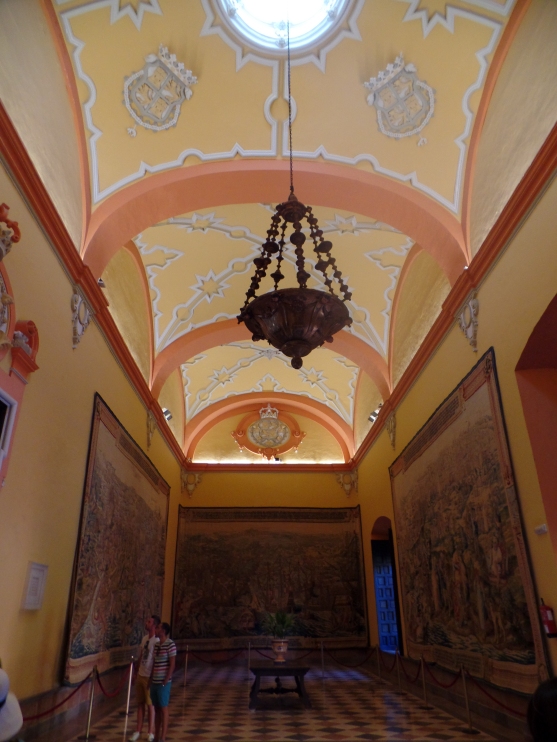
The halls on the second floor also has a display of the largest maps, tapestries that I have ever seen. They are so old that I am afraid of even touching it. Some of the tapestries depict the routes taken by Spanish voayagers during the era of exploration in the 1500s.
The outside pond/garden Estanque de Mercurio also had a great impact. After a leisurely walk along the many halls and patios inside the Alcazar, I stumbled upon this fountain and pond. Located near the gardens, this place just gives one a sense of peace and contentment.
There is water coming from the roof and as the sun’s ray passes through the falling water, it creates a mini rainbow that just took my breath away.
SAMSUNG CAMERA PICTURES
A few hours of visit is just not enough to get a good appreciation of the Alcazar’s many halls and patios. I stayed for only about two hours because of limited time and still, I wasn’t able to discover many of its hidden secrets.
But I guess, that’s the way, Real Alcazar is. No matter how much you try to explore it, it remains an enigma even to those who have walked through its corridors many times before.


And to satisfy that lingering curiosity, you just cant help but go back.

Friday, May 13, 2016

Authentic Spanish Cuisines at Antigua Taberna de Las Escobas in Seville Spain


Photo from http://www.guiadelocio.com/sevilla/restaurantes/sevilla/las-escobas
Years ago, a wise food guru once told me that to fully grasp the essence of a local delicacy, you must taste it at its very native source.
I agreed with him at the time in deference to his stature, but deep inside, I was disagreeing. There may be some truth in what he said and honestly, it is quite ideal, but it so very impractical. If you follow his reasoning, one must journey to Italia to get an authentic taste of Italian food. One must cross oceans to China, to get authentic dimsum.
I reasoned as well, that an honest to goodness native chef may travel to a foreign land and still cook authentic dishes. I dismissed what he said and went on with my adventures, his words of wisdom put at the recesses of my mind.
But in my most recent trip to Seville, Spain, his words came to me serendipitously.
I was in Seville in September and my colleagues and I were on the hunt for the most authentic Spanish restaurant we can find. We explored the general centro area around Seville Cathedral and stumbled upon Antigua Taberna de Las Escobas.
Since 1386
Compared to other restaurants and dining options along Calle Quintero, this particular restaurant looked positively ancient, medieval even, enticing our group to come in.
Only after spending a few minutes inside the restaurant did we learn that we were in fact dining at the oldest taberna in all of Spain with the restaurant tracing its origins to 1386!!!
Wow, it is even older than Ferdinand Magellan and his subsequent discovery of the Philippines in 1521.
It is so old that its previous patrons included some of the who’s who in Spanish history.
Among the taberna’s regulars was poet, playwright and novelist Miguel de Cervantes de Saavedra, author of the famed Don Quixote. Also a fan of the taberna was fellow poet and playwright Felix Arturo Lope de Vega.
Foreign followers of the place include famous French author Alexandre Dumas and British author Lord Byron.
Though the current interiors of the restaurant may have been refurbished and updated to keep up with the modern times, one can’t help but get that feeling of being somewhere from the old world.
Tapas Sorpresa
The lightining was intentionally dimmer, almost sepia, and the furniture intentionally old-fashioned, but definitely built to provide comfort to rich Sevillan customers.
The ceiling was made of old mahogany wood adorned with decors of brass/ or gold-plated lion’s head. The effect really gives one that authentic old Spanish feel.
Authentic Spanish Experience
Now, as I was saying earlier, the words of the wise food guru came to me in a flash as soon as we ordered our food.
Aside from the Spanish flair of the place, the menu served at Las Escobas was truly local.
Being in operation since 1386, Las Escobas has surely perfected the art of cooking authentic Spanish cuisines whether they are tapas or platos.
Las Escobas is famous for its tapas sorpresa or basically tapas of the day. You pay 15 Euros and you can five types of tapas ranging from the usual mushrooms, gambas, to real surprising tapas as sweets, jamon iberico, and salchichon among others.
Tired and hungr y from a day’s worth of endless walking, we ordered two pans of paella de mariscos and had the best tasting paella in all of our stay in Seville and that’s saying something.
Get this: Paella was a Valencian invention which gained popularity in the 1800s. It is therefore not a surprise that Las Escobas, already old by any standards during the 19th century, has also mastered the art of cooking this dish almost synonymous to Spanish gastronomy.
We also ordered Asado Iberico con Setas and several servings of carne pinchos of meat skewers, which brought us to absolute heaven. The meat was well done, which is just the way I like it.
We ordered several other tapas, vino and bebida (beverages).
Aside from the restaurant’s mastery of the Spanish dish, what made that meal truly authentic was the ambiance of the place, the culture and the manner with which the patrons dined in their own corners.
Here in the Philippines, you can have your Spanish dinner at 6;30pm or 7pm and that’s perfectly fine. In Spain, people would still be sleeping or just waking up around those times.
They would head out for dinner at around 9:30pm or 10pm, thus explaining the throngs of people that fill Calle Quintero at that prime hour of 11;30pm.
While having dinner, I was watching from the corners of my eyes, how the locals dine, intent on getting a feel of how it’s like to dine Spanish style.
Paella de Mariscos
You can see groups of women or amigas, sharing light meals and bottles of vino, with their perfectly made up faces and regal night outfit.
One man was reading Diario Seville while enjoying his Andalucian gazpacho.
A young couple was holding hands and exchanging passionate kisses at the corner, oblivious to curious onlookers such as I.
Indeed, it was a Spanish dining that was as authentic as it can get.
And i’m very happy that I had the chance to experience and live it even for one night.
Carne pinchos (skewers)
Calle Quintero

Sunday, May 8, 2016

10 Must-See Attractions in Madrid

Madrid Overview. photo from telegraph.co.uk

The capital and the largest city in Spain, Madrid is considered by many as one of the most stunning and breathtakingly beautiful cities in the world. Its ornate buildings are second to none, and its history is so colorful, the city almost always figures very high in the bucket list of most travelers.
I was a wide-eyed 19 year old when I first dreamed of seeing Madrid.
I was young, idealistic and romantic. I see the glass half full and I couldn’t wait to see the world and all its possibilities. I enrolled in a basic Spanish class confident that I would be able to use it as soon as I am able to travel the world, and I expected that to happen right after graduation. I learned my Spanish verbs and their conjugations, while getting a crash course on the history, culture and geography of Spain.
SAMSUNG CAMERA PICTURES
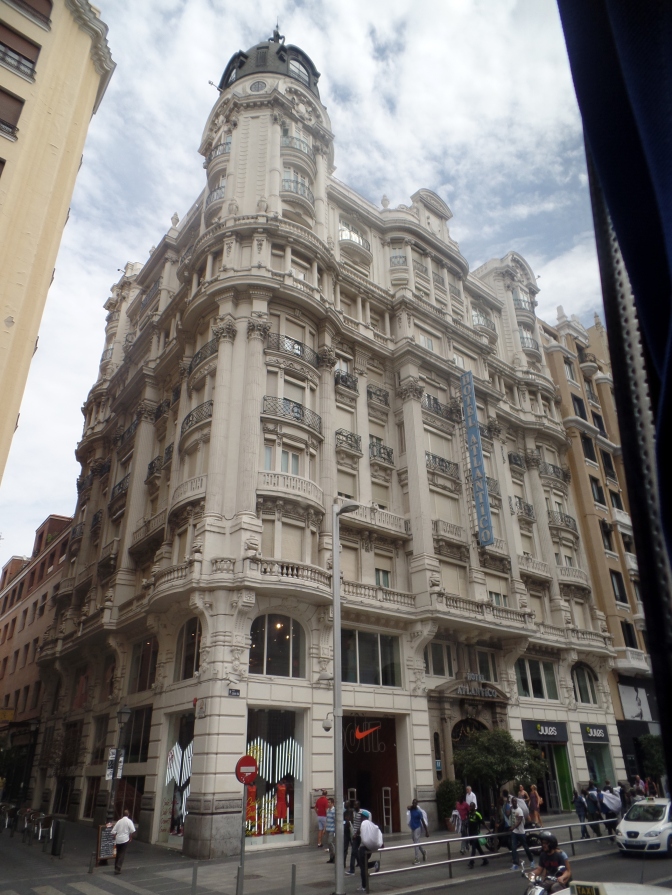
Hotel Atlantico in Gran Via
Unfortunately, life happened and my plans of traveling all over Europe fell through. I put in on hold until suddenly, I woke up and a decade has passed and that dream still hasn’t materialized.

But as it usually does, life has a way of bringing back what was once lost to you. In a welcome twist of fate, I was able to come visit Madrid recently and with it came the realization that my love and fascination of the motherland (The Philippines was colonized by Spain for 333 years) remains intact.
I spent three days in Madrid during my stay. Though it was indeed short and not enough time to get a full grasp of the everyday  life in the city, it allowed me to at least discover some of the highlights the city has to offer.
SAMSUNG CAMERA PICTURES
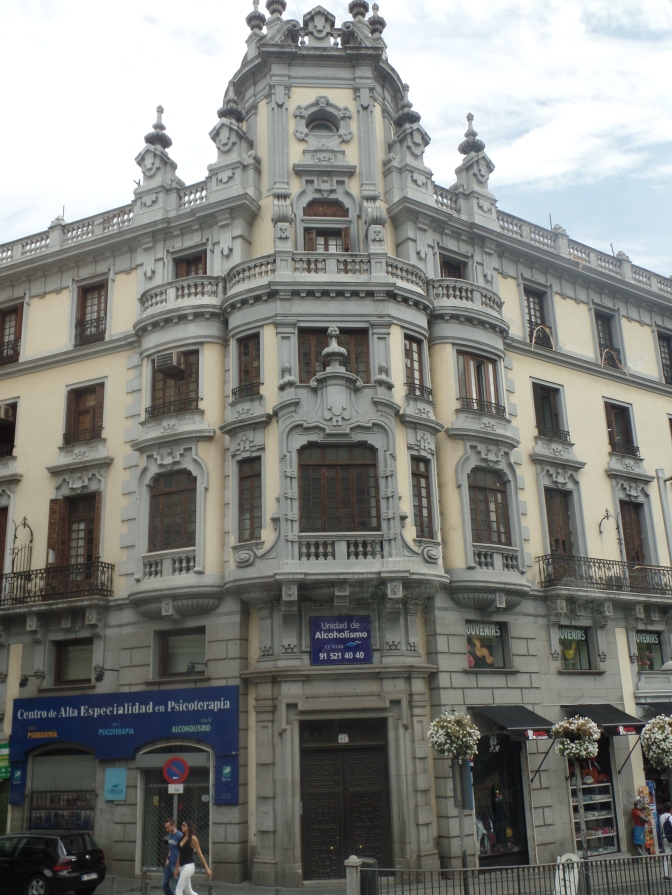
Casa del Cura along Gran Via
Gran Via 
Constructed by Spanish urban planners in the early 1900’s, the Grand Via is a long stretch of street in central Madrid. Lined up with shops, clubs, tapas bars, restaurants, hotels for all budget, and malls, it is widely known as the street that never sleeps and it has become a major tourist spot in the city, thanks in part to the eclectic mix of architecture sported by the many buildings such as Art Deco and Neo Mudejar and Plateresque.
It helps that this thoroughfare is a walking distance to some of the most important Madrid attractions.
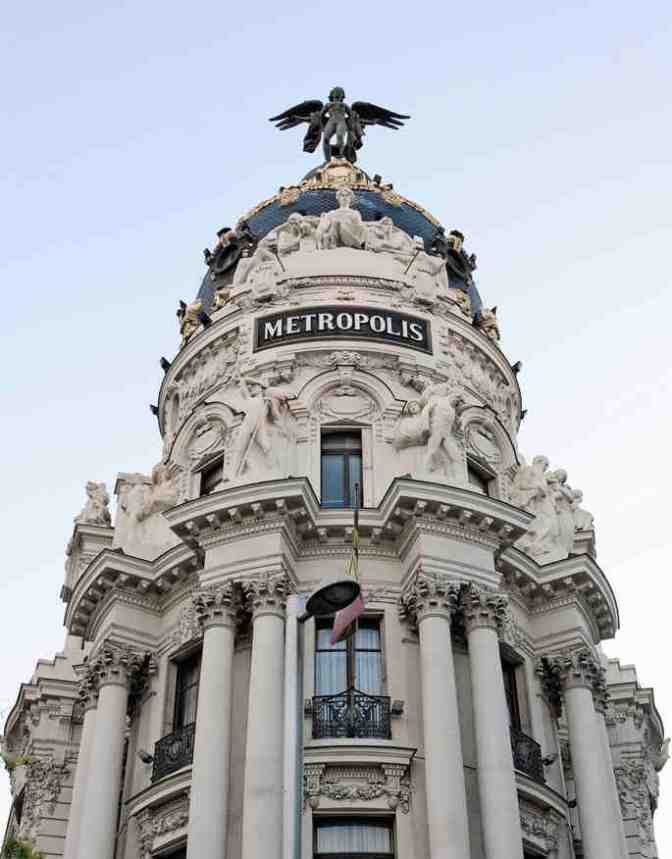
metropolis-building
Metropolis Building. Photo fromhttp://www.spainattractions.es
Edificio Metropolis
Some of the most recognizable buildings along the Gran Via is the 1911-built Edificio Metropolis, located at the corner of Calle Alcala. This French-inspired building is most famous because of winged goddess of victory that adorns its rooftop. In fact, make a quick image search of Gran Via and chances are the building are prominently featured in most of them. The best vantage point to take photos of the street is at the  Círculo de Bellas Artes
Fundacion Telefonica
Another famous building along Gran Via is the Fundacion Telefonica. it was one of the tallest buildings in Europe during its completion in 1929. History books say that this building was instrumental in guiding the French troops into the city during the Civil War. The clock at the top was used by Franco’s troops during the Civil War to help guide bullets into the city. Today, it is a contemporary arts foundation with an excellent, free gallery.
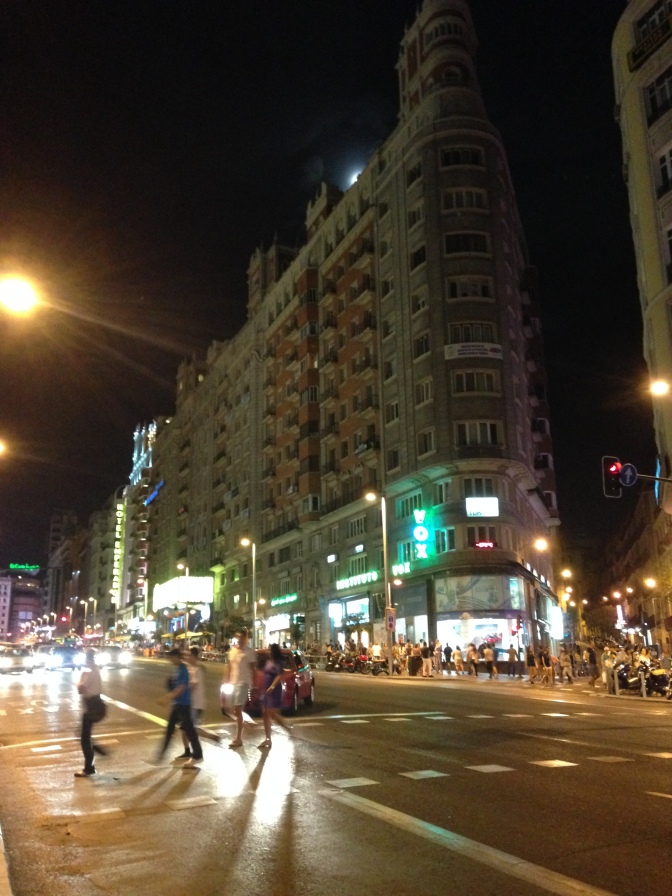
IMG_7772
Gran Via at Night
Museo Chicote
If you are a fan of English literature, then you’ll have a great time drinking cerveza or cocktails at the Museo Chicote. This Art-deco designed bar was a former haunt of Ernest Hemingway in the 1930s. Grace Kelly was even said to have visited this cocktail bar during its heyday.
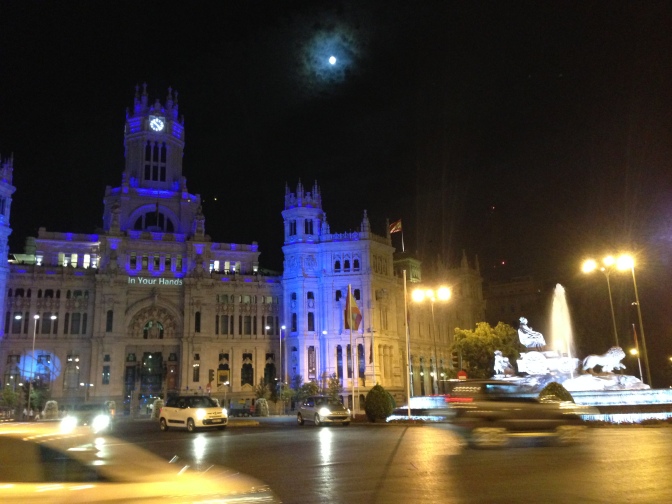
IMG_7771
Plaza Cibeles
Plaza Cibeles
From the Atocha train station, I traveled by coach bus to Gran Via and one of the first things that caught my attention is the majestic Plaza Cibeles. One of the grandest rotundas in Madrid, it is adorned by the 18th century Fuente de Cibeles named after the Greco-Roman goddess of fertility, Cybele. Cybele is also acknowledged as the Great mother of the Gods. The Plaza is surrounded by Neo-Classica buildings such as the white Palacio de Comunicaciones.

Barrio de las Letras,
In the 16th to 17th century, some of most prolific writers lived in the Barrio de la Las Letras or District of Letters, an area located east of the Plaza de Santa Ana. One of the most famous writers who lived in Madrid was Miguel de Cervantes de Saavedra, the author of the Don Quijote. Another literary landmark is the Casa de Lope de Vega , the former home of Lope de Vega (1562–1635), Spain’s premier playwright. It’s now a museum containing memorabilia from Lope de Vega’s life and work.
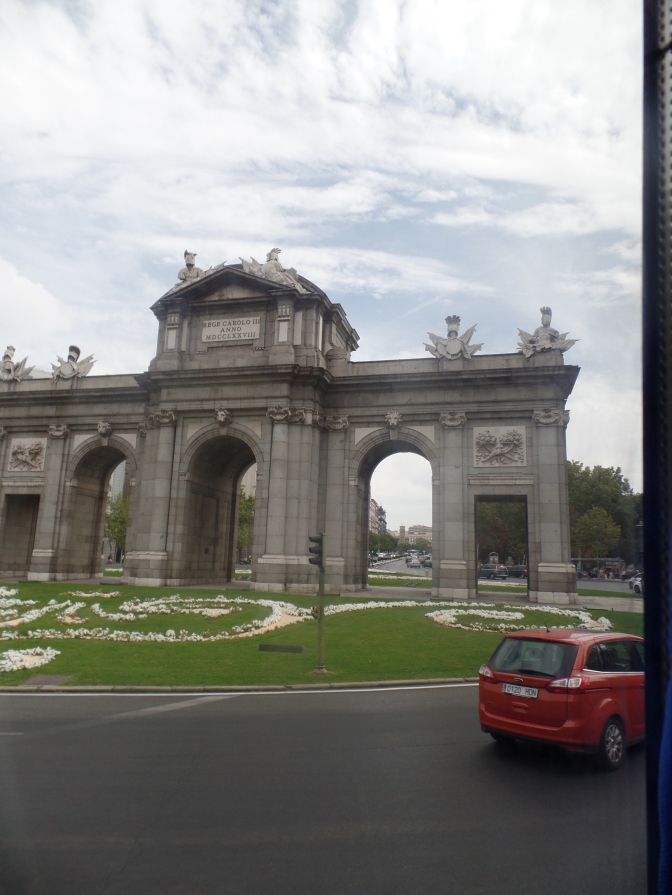
SAMSUNG CAMERA PICTURES
Puerta de Alcala
Puerta de Alcala
Completed in 1769, the Puerta de Alcala stands at Plaza de la Independencia in Madrid. It was designed by Italian architect, Francisco Sabatini. It is in the middle of Calle de Alcalá, one of the oldest streets in Madrid, and which runs from the Puerta del Sol in the city centre outwards to the town of Alcalá de Henares, lying to the northeast of the city. it is adorned by six statues by Spanish sculptors Francisco Gutiérrez and Roberto Michel. The raised central part at the gate’s highest point has a plaque, which reads: “REGE CARLO III ANNO MDCCLXXVIII.” This commemorates the date of the gate’s inauguration by King Carlos III.
royal-palace
Royal Palace. Photo from http://www.gomadrid.com
Royal Palace
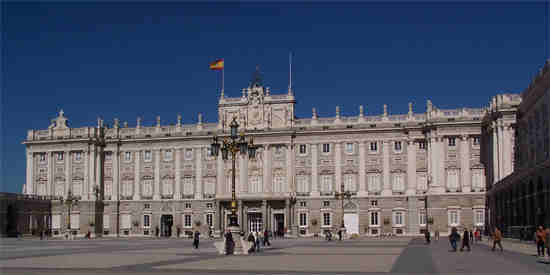
One of the biggest palaces in Europe, Madrid’s Royal Palace boasts of 2,500 ornately decorated rooms. This 18th century edifice was the official royal residence for the Spanish monarchy dating back to Carlos III. The last royals to reside there were Alfonso XIII and Victoria Eugenie in the early 1900s. About 50 rooms are open to the public, including an armory, pharmacy and the palace’s lavish throne room, or “Salón del Trono,” which features a ceiling painted by the Baroque artist Tiepolo. A fresco in the grand dining hall depicts Christopher Columbus presenting gifts from the New World to King Ferdinand and Queen Isabella.
SAMSUNG CAMERA PICTURES
Plaza Mayor
Plaza Mayor
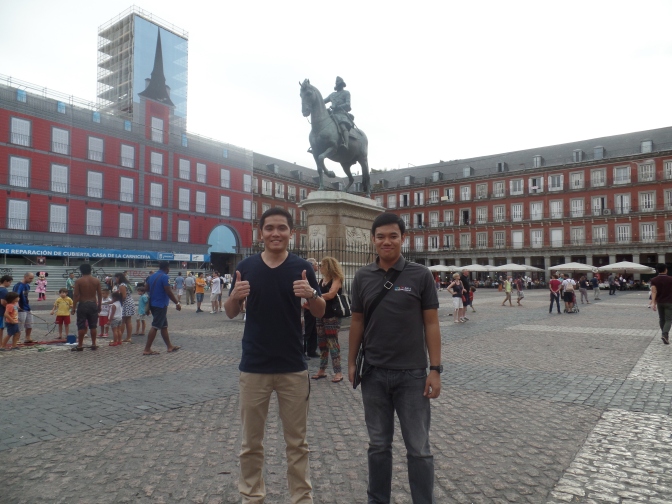
If you ever get the chance to visit Madrid, you can’t ever miss Plaza Mayor. One of the most impressive and photographed plazas in the city, it dates back to 1619. It has had a very dark past, hosting bullfights and beheadings of accused heretics during the Spanish inquisition. Three sides of the rectangular cobblestone plaza are bordered by 18th century 3-storey apartments. The center piece of the plaza is a statue of Philip III on horseback.
tramosfinalesgc_02
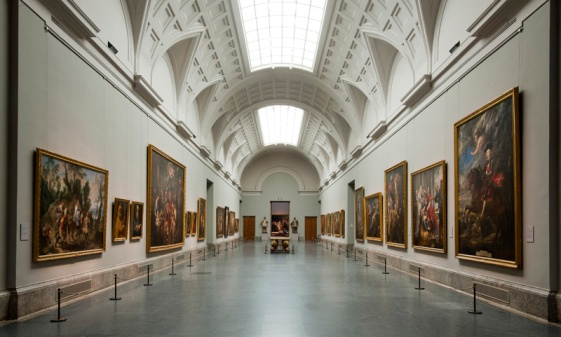
The Rubens section of Museo del Prado. Photo courtesy ofhttp://www.museodelprao.es
The Museum Triangle 
Madrid is a great city for arts enthusiasts. In this city, you will find a triangle of museums that house both ancient and contemporary works of art. Located along Paseo del Prado, you will find the Museo del Prado, the Thyssen-Bornemisza private museum and the Reina Sofia, Madrid’s modern art museum. One of the finest art collections in the world and the best collection of classical art in Madrid, the Museo del Prado features works from renowned artists from Spain, Italy, Netherlands and Belgium. You can find here works of El Greco, Rubens, van Dyck, and Brueghel, Botticelli, Caravaggio and Albrecht Dürer among others. The Prado Museum currently offers free entry Monday to Saturday, 6pm to 8pm, and Sundays and holidays from 5pm to 7pm. Meanwhile, the Reina Sofia boasts of many contemporary art masterpieces including those of Pablo Picasso and Salvador Dali.
Madrid is an undeniably picturesque city that has everything for everyone. It is a city full of life, color and beauty. 
If you have the means to do it, I recommend that you visit Madrid at least once. It will be a feast to the sense, that I can guarantee.

Saturday, April 23, 2016

A Romantic Evening Along the River Guadalquivir in Sevilla


During my earlier years of exploration,  I was a bit guilty of committing a minor travel offense. Of course, it happens to the best of travelers, but in my case, I consciously focused on the highlights of a particular city, and in doing so, inadvertently skipped minor details or lesser known destinations.
This has come to haunt me in the past, when after returning home, I would come to know of a place so appealing and interesting, that’s not necessarily included in the official guidebook’s ‘must-see’ attractions.
In Sevilla, the capital of the Andalusian region of Spain, I almost made the same mistake due to the sheer size of the city and the sheer number of interesting sights and places. it’s a good thing that for once, I threw caution to the wind, left my lonely planet guidebook at the hotel, and decided to take a leisurely stroll around the city without any maps or plans.
It led me to the enchanting river Guadalquivir.
Separating the main island of Sevilla and the independent community of Triana, the river runs through the Iberian peninsula, supporting commerce, industry and tourism in many towns and provinces in Andalusia.
IMG_7512
Triana
Stretching 657 kilometers, it is the second longest river in Spain. This mighty river was instrumental to the growth of the Iberian peninsula and of Triana, which during its heyday, is a center of commerce. It brought Phoenicians, Arabs, Moors, Visigoths, Romans and even Vikings to Iberia.
By itself, the river Guadalquivir is a marvel to behold, especially if you take one of the many river cruises.
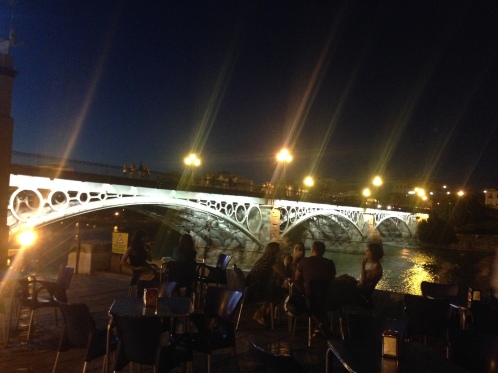
But the river comes fully alive come dusk as the lights from the great bridge Punta de Triana, which separates Sevilla and Triana, illuminate this lovely body of water, creating a magical, romantic setting.
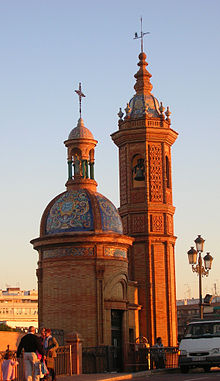
Without any set itinerary, I crossed Punta de Triana, passing by the  Moorish Revival-designed Chapel of El Carmen.
220px-Pont_de_Triana
Chapel of El Carmen
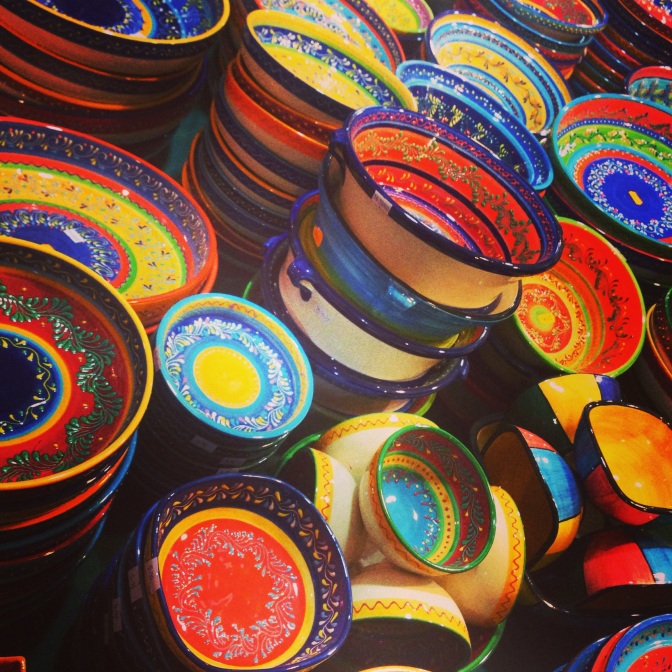
I also made a quick stop at the Mercado de Triana to buy some fresh fruits, before making my way to the Plaza del Altozano, the commercial center of Triana, which boasts of a hundred cervezerias, tapas bars and tile and ceramics stores.
IMG_7545
Plaza del Altozano is also your main gateway to Calle Betis,  San Jorge or Pureza. Calle Betis, is of course the main street in the area as it sits right at the western bank of the Guadalquivir.
IMG_7157
Calle Betis
I had dinner at one of the tavernas, while enjoyingpinchos and paella valenciana. I watched as both Sevillanos and Trianeros get ready for a relaxing evening
In the afternoon, the image of Sevilla is mirrored in the river’s waters. The most prominent structures along the eastern bank is of course the Torre del Oro.
Come evening, the bright lights of Sevilla glistens in the water.
The lights of the bridge and the glistening waters add to the already romantic Spanish flair of the place. Perhaps, this is the reason why, as darkness falls, more and more couples and friends gather right beside the river to hang out and chill.
IMG_7527
Sevillanos having a relaxing evening along Calle Betis
Spanish people are very expressive and it was on display as I people watch along the banks of the river. Couples would hold hands for hours and kiss every non and then. Friends would laugh boisterously as they tap each other’s shoulder or hold hands.
There is something so relaxing in watching the Sevillanos and Trianeros unwind in their natural habitat. No pretensions. It made my natural instinct to flee and make a mad dash across the city’s attractions, dissipate.
PB Plaza del Altozano (3)
Plaza del Altozano. photo courtesy ofhttp://www.sevilladailyphoto.blogspot.com
The romantic Spanish air must have worked its magic on me, as all of sudden, I realized that I have spent the better part of the day, strolling along the banks of the river, while consuming, perhaps three or four bottles of cerveza.
In the days after that evening, I spent hours visiting the highlights of Sevilla. I went to churches, castles, gardens and museums.
But I would always look back to the wonderful, relaxing evening I spent, strolling along the romantic banks of the Guadalquivir.

Thursday, March 31, 2016

9 Best Attractions in Seville, Spain


Considered as the capital of the independent community of Andalucia in Southern Spain, Sevilla (Seville for English speakers) is a picturesque province bursting in color, life and character. Like its fellow Spanish cities of Barcelona, and Madrid, this land situated at the banks of the Guadalquivir, gives proof to the Spanish penchant for beauty, culture and art.
I had the wonderful opportunity to visit Seville recently and no words could describe the emotions that took over me during my one week-visit. Once you arrive in Seville, you will have that certain feeling of calmness and relaxation absent in the megalopolis that is Madrid.
You can take a walk and find small alleys that are so lovely, you can’t help but spend countless minutes there. Or you can go to the city center, and find it absolutely vibrant and alluring, you would never want to leave until the wee hours of the morning.
It’s not just the places that captivated me. Everyone was so laidback here and they indeed observed the siesta, leaving most of the tourist places yours to enjoy for hours. I soaked up the Andalusian sun and let Seville overwhelm me and I can say that it’s one of the best places on Earth.
I took the liberty of compiling the best places to check out in this gorgeous province. Mind you, these are the places that really captivated me. You can check out other travel websites and find other attractions like the Parque Maria Luisa (just-so-so), Plaza de Toros de la Real Maestranza de Caballeria de Sevilla (there was no bullfight so I never got inside) and Torre del Oro (just so-so too) but they are not listed here for the said reasons.
Seville Cathedral
Any visit to Sevilla would not be complete without checking out the Cathedral of Saint Mary of the See or simply Seville Cathedral. Any local, hotel employee or taxi driver would insist that you go here and they have good reason. A mammoth structure located in the center of town, Seville Cathedral is the largest Gothic church in the world and the third largest church of all. Counstruction began in 1402 and it was completed in 1506. Work resumed again when the dome collapsed in 1511.It was declared a UNESCO World Heritage Site in 1987. The bell tower beside the church is called La Giralda and is considered a tourist destination in its own right. The nearby Archivos de Indies housed in the Casa Lonja de Marcaderes is also a heritage site. it houses all the oldest and most important documents of the Spanish empire during the medieval period.
Real Alcazar
This grand Palace will soon be featured in the Games of Thrones series and everyday, the queue is so long. The site of the palace used to be a Moorish fort but was redesigned to be a grandiose structure to house the Spanish monarchs. The Moorish fort stood in 913 AD but construction of Alcazar was formally acknowledged in 1248. It is now the oldest royal palace still in use in Europe. In 1987, it was also registered as a UNESCO World Heritage site.
Ayuntamiento de Seville
The general area around the cathedral is called centro. It is literally the center of all action in Seville. And in this area, you will see the Ayuntamiento de Sevilla and the large plaza around it. By day, it is one of the most beautiful buildings in Seville, with intricate carvings on its facade. By night, the plaza is filled with locals drinking under the moonlight. i think it becomes one of those public spaces for drinking called botellones. The ambiance is electric and if you really wanna experience Seville as a local, and/or meet the locals, here’s one good place to check out.
Plaza de Espana 

Oh, wow. That’s literally the first words that came out of my mouth when I saw Plaza de Espana for the first time. It is so grandiose and majestic and huge, I can’t fit it all inside one camera frame. It was built in 1928 in time for the Ibero-American Expo in 1929. The design is a mix of Art-deco and Neo-Mudejar achitecture. It is a semi-circle in shape and there’s a moat that runs through the entire circle. There is also a grand fountain in the middle. The best time to check it out is near sunset when it is not so hot and you can paddle a boat around the moat. This place attracts tourists, families and lovers (for the boat) alike.
Calle Sierpes
If you are after some shopping in Seville, then you must check out Sierpes. Of course the place is littered with the mall El Corte Ingles but where’s the fun in that right? Sierpes is basically a long stretch of road filled with shops, and restaurants, where you can see lots of Sale, or rebajas. You can buy souvenirs, chocolates and some Spanish brands such as Desigual here. It is quite close to the Ayuntamiento de Sevilla so before drinking or having dinner, locals loiter around here.
Metropol Parasol
At the northern end of Calle Sierpes, you can take a right, pass by the Universidad de Seville and marvel at the Metropol Parasol or locally known as Las Setas de Encarnacion or giant mushroom. Located in Seville’s old quarter, it claims to be the biggest wooden structure in the world. It has four levels with levels 1 providing a space for public exhibits and for people to lazy around. During my visit, there was a Jamaican band who did an impromptu reggae set. How cool was that huh? Levels 2-3 have panoramic terraces and a restaurant where you can get the best vantage view (and photos of course) of entire Seville.
Triana
Located at the west bank of the Guadalquivir river, Triana is considered as the gypsy quarter of Seville. Durng previous centuries, sailors and gypsies were relegated to this independent community. Now the place boasts of the best bars, and cervezerias in Seville with a great view of the Torre del oro and the river. By day, you can see and buy the best ceramic tiles. By day, you can drink and party at the numerous nightclubs along Calle Betis, fronting the river. Triana is separated from the rest of Seville by the Guadalquivir and can be reached by the Puente de Triana. Note: you can take a river cruise and see Calle Betis and all of its colorful houses.
Alameda de Hercules
According to Legends, Seville was built by the Greek hero Hercules. This explains, why Seville has a plaza called Alameda de Hercules.The plaza has two pillars each at the north and south end depicting the real pillars in Gibraltar. There is a statue of Hercules on top of one of the towers and there is also a statue of Julius Caesar in remembrance of Rome’s rule over Seville (then called Hispalis). This is a place where people hang around to chat and uwind. There is a children’s playground at one side and around the plaza, there are lots of restaurants, bars and clubs to choose from. I fell in love with it because you can observe the locals and their families here. It is located near the La Macarena district of Seville.
Calle Amor de Dios
Also located in the alternative side of Seville, the La Macarena is a curious little street called Calle Amor de Dios. I loved this place because this is actually the queer side of Seville. Homosexuality is accepted in Spain and in Europe in general and this little tiny street attracts the local LGBT community. Foreigners with the alternative inclination also flock to this area. You can check out La Bohemia Bar, El Hombro y el Oso (The Man and the Bear), and Men to Men, which is technically located in the adjacent Calle Trajano. But you get the gist.
Seville is indeed a marvelous place. Whether you’re a history geek, an architecture junkie, a partyphile, a traveler or simply a tourist, there is something that will appeal to you. Honestly, Seville is sometimes overlooked in favor of the fancier and flashier Madrid, but there are hidden gems in this place. And it’s up to you to discover them.

Sunday, March 27, 2016

The Magnificent Parc Guell in Barcelona


As a young aspiring traveler, I used to browse through hundreds of travel magazines and watch countless documentaries featuring some of the most amazing sights and destinations the world has to offer.
Most of these destinations have left a lasting impression on me, shaping the kind of traveler and adventurer that I am today. However, I must confess that some destinations excited me more than others and there are others that just simply took my breath away at first glance.
The magnificent Parc Guell at the heart of the the Catalunya region in Barcelona, just knocked me off my feet. It was more than I could have ever hoped it would be, and it was more impressive that I thought it would be.

OLYMPUS DIGITAL CAMERA
The colorful mosaics at Parc Guell

I was on a whirlwind 48-hour trip to Barcelona recently and I was determined to visit Prac Guell on my very first hour. You see, I have long dreamed of visiting it to gaze at the colorful mosaic and touch the architectonic installations that the genius artist Antoni Gaudi envisioned. Gaudi, of course, is the single most influential figure and proponent of Catalan modernism.
Built in the early 1900’s and officially unveiled to the public in 1926, the park was commissioned by wealthy Catalan businessman Eusebi Guell. It is world-famous because of its colorful mosaics, and structures that reflect Gaudi’s very singular and unique architectural style.
Most experts agree that Gaudi’s basis for his style is Baroque, but he threw away the rigid forms, and mixed his style with his love of organic shapes, that is now heavily visible in the stone structures inside the park. He mastered this style by studying the elements of geometry and expanding its basic principles.
Parc Guell is located at the Carmen Hill in the neigborhood of Gracia in Barcelona. To get there, you have to take a cab or else, it would be a steep climb, because of its elevated location.

OLYMPUS DIGITAL CAMERA
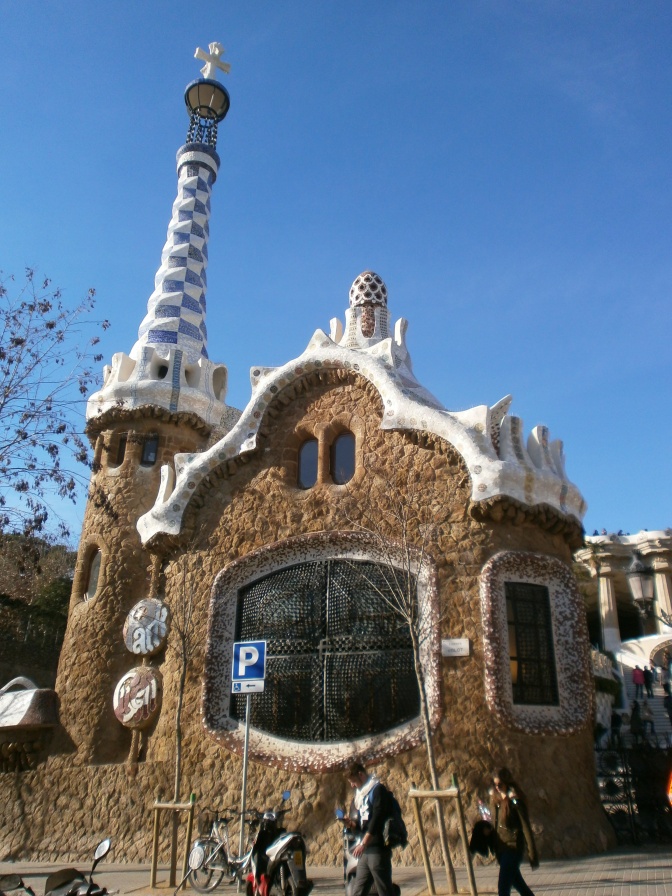
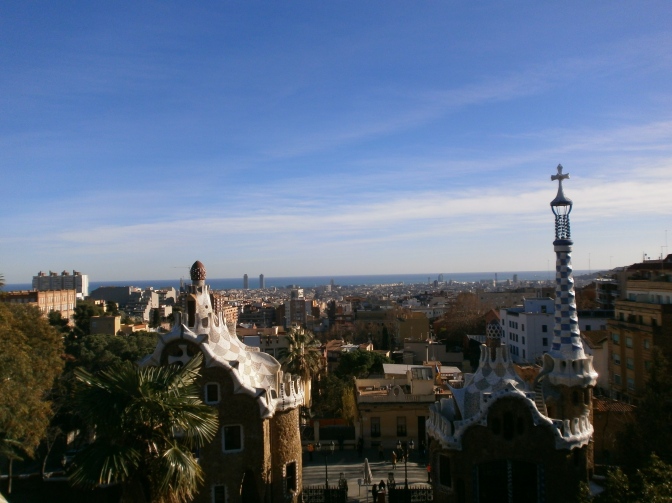
The Porter’s Lodge

But all effort is worth it as soon as you get a glimpse of irregularly shaped pavilions that form the porter’s lodge both of which that adorn the main park entrance. According to the park’s website, ” The one to the left was the one actually used as a porter’s lodge, with a waiting room and telephone booth, while the one to the right was the porter’s residence, whence the name Casa del Guarda, though it is today part of the Barcelona History Museum. Both have very beautiful roofs, built with the traditional Catalan clay tiles covered with “trencadís”, a mosaic made of tile shards”
To get inside Parc Guell you will have to pay the 8 Euro fee and then you can explore on your own.

OLYMPUS DIGITAL CAMERA
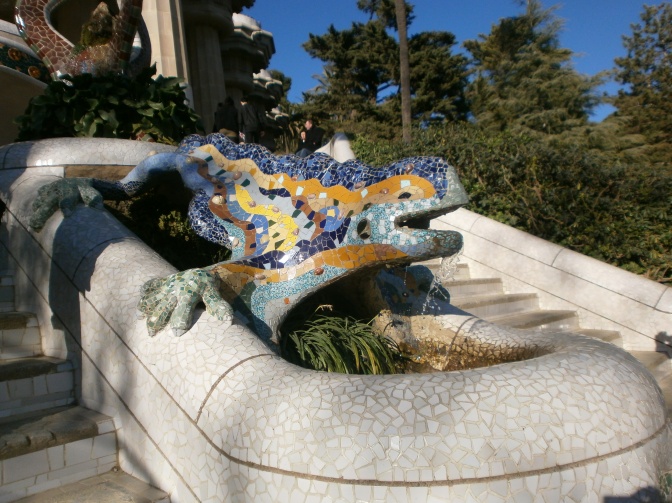
The Dragon


OLYMPUS DIGITAL CAMERA
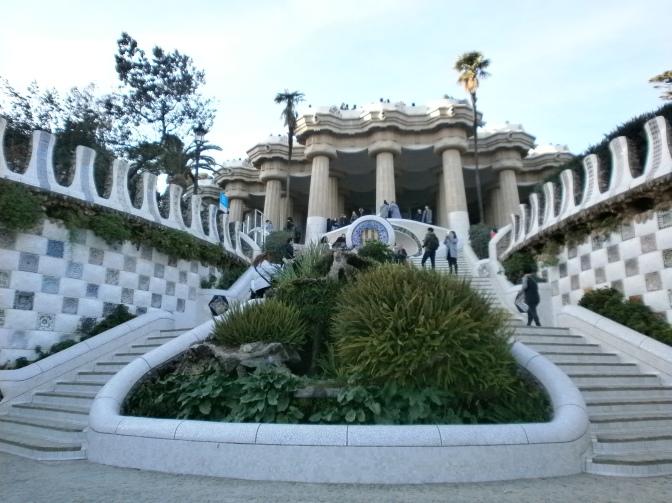
The Dragon Stairway

The Dragon Stairway
One of the main attractions is the Dragon Stairway, highlighted by the  multicolored salamander statue that welcomes visitors at the main stairs of the park. It is so full of character and color that locals have lovingly nicknamed it “el drac” or the dragon. The stairway is made up of a twin flight of steps, flanked by two walls with merlons that form terraces which hides two grottos. The emblem of Catalonia is also displayed at the stairway.

OLYMPUS DIGITAL CAMERA
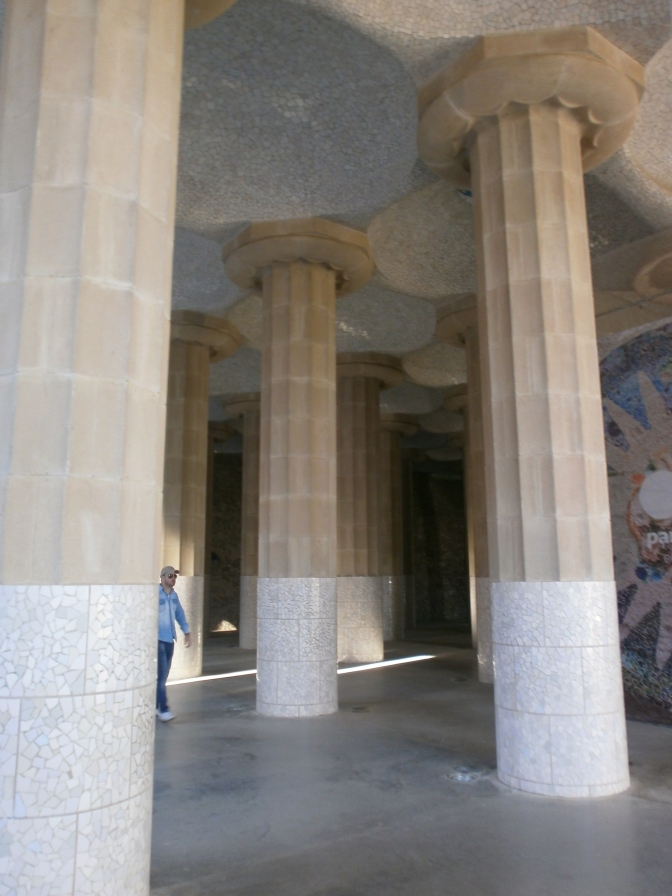
The Doric Columns at the Hypostyle Room

The Hypostyle Room
The great park stairway leads to the Hypostyle Room, which was originally designed to be the marketplace of the estate. It is made up of about 86 Doric columns.

OLYMPUS DIGITAL CAMERA
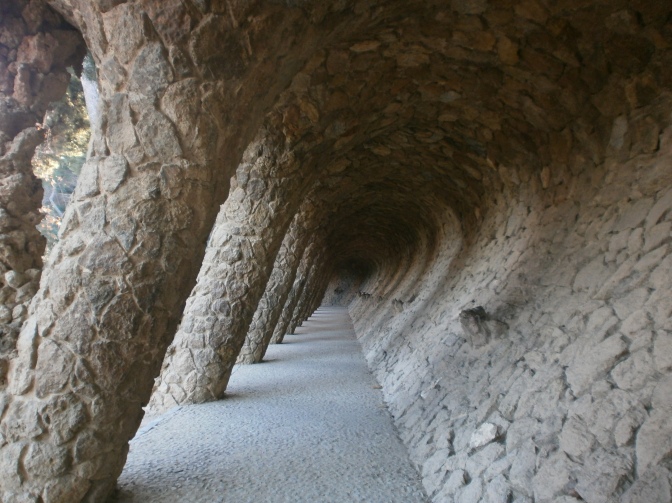
The Laundry Room Portico

The Laundry Room Portico
The Laundry Room Portico is my favorite area in Park Guell. The slanting stone columns are classic examples of Gaudi’s organic architecture and this particular area has been popularized in various movies and TV shows including “Vicky Christina Barcelona” and the Taiwanese-drama Meteor Garden. A big part of why I visited Barcelona is this place. I have long wanted to marvel at the stone columns and doing it was indeed a magical experience for me.

OLYMPUS DIGITAL CAMERA
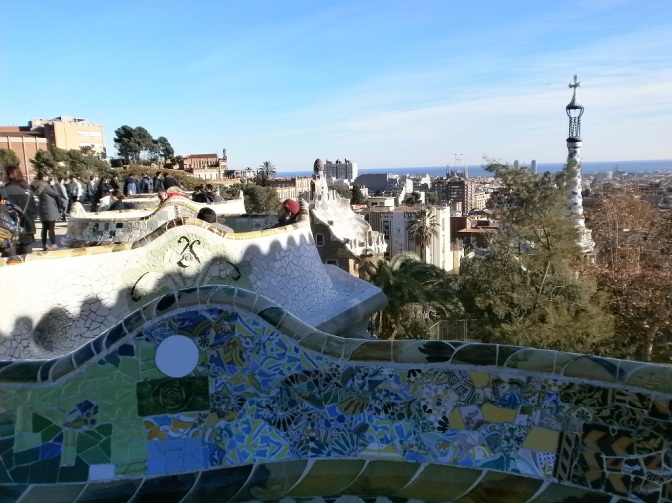
A View of the Gracia neighborhood from atop Parc Guell

The Greek Theatre or Nature Square
After passing the porticos, most visitors end up lounging or relaxing at the large esplanade which the original plans called the Greek Theatre. But it is now called the Nature Square or Placa de la Natura in Catalan (not Spanish). This place is the best place to marvel at the impressive and colorful tiles that the Park is famous for. It also gives visitors a gorgeous view of the Gracia district of Barcelona. Here’s a tip, visit the park in the afternoon when most of the tour visitors have left and the sun is about to set. It is an unforgettable sight, I can assure you.